Yoghy Organics
Yoghy Organics Pure Botanical Tisanes & Ratio Engine
Ayurvedic Spiced Bark Category Silo

Organic Cinnamon Tea: True Ceylon Verum Infusions & Wellness Guide

Stovetop simmer decoction ratios, coumarin safety testing, and evidence-based metabolic wellness from authentic Sri Lankan Cinnamomum verum.

Phytochemical Stovetop Protocol

Ceylon Cinnamon Decoction & Safety Calculator

Cinnamomum verum
5.0 g (1 quill)
15 minutes

Unlike soft leaves, woody quills require continuous low simmer to extract lipophilic cinnamaldehyde.

Botanical Species Comparison:
Estimated Coumarin Content < 0.0002 g (Safe)
Cinnamtannin B1 Yield High (Active)
Decoction Flame Level Low / Gentle Bare Simmer
BfR Daily Safety Margin 100% Within Limit
Preparation Tip: Break quills into 1-inch fragments before simmering to double bark solvent surface area and intensify sweetness.
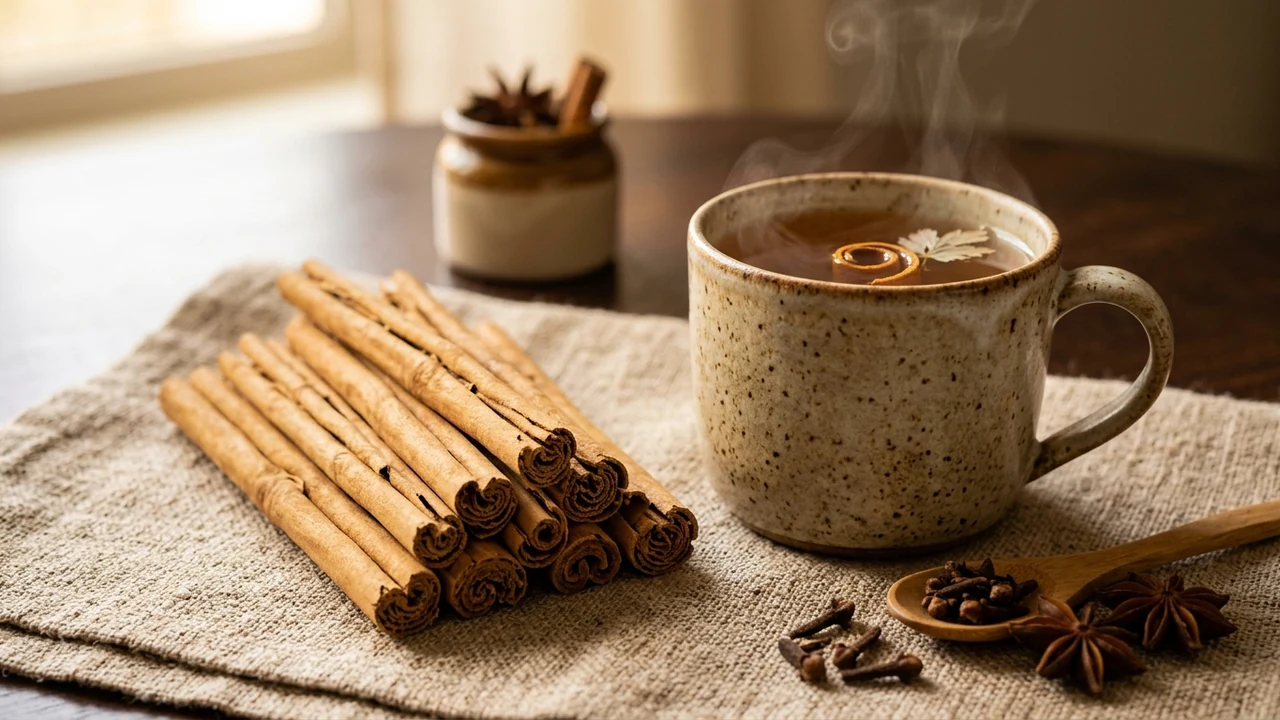
Steaming cup of organic Ceylon cinnamon tea with delicate layered quills on natural linen
Ceylon Harvest
Botanical Standard: Cinnamomum verum Coumarin < 0.004%

Interactive Cinnamon Decoction Calculator & Simmer Ratio Engine

Organic cinnamon tea prepared with true Ceylon cinnamon (Cinnamomum verum) delivers warming sweet flavor with naturally ultra-low coumarin levels (<0.004%), unlike toxic Cassia bark. An active 15-minute stovetop simmer decoction at 212°F extracts restorative cinnamaldehyde and cinnamtannin B1 polyphenols for metabolic and digestive wellness.

Brewing high-grade True Ceylon Cinnamon requires an active decoction rather than a brief steep. In traditional phytotherapy, woody bark requires a sustained Stovetop Simmer (212°F) to induce cellular Lignin Breakdown and liberate tightly bound essential oils.

Unlike bitter Cassia, delicate Ceylon quills contain negligible astringent tannins, producing a naturally sweet liquor that supports healthy Insulin Sensitivity. Explore our loose quill and tea bag offerings in the true Ceylon cinnamon tea bags monograph.

True Ceylon vs Cassia Cinnamon: The Critical Coumarin Safety Difference

The spice sold as grocery cinnamon is almost universally Cassia Cinnamon (Cinnamomum cassia). While pungent and cheap, Cassia carries significant risk of Coumarin Toxicity (<0.004%) in True Ceylon versus up to 1.0% in Cassia bark.

In contrast, authentic Cinnamomum verum contains mere trace levels of coumarin, allowing daily consumption without hepatotoxic concern. Multi-layered, paper-thin Bark Quills crumble effortlessly between your fingers, releasing a complex citrusy aroma.

True Ceylon Cinnamon

Paper-Thin Multi-Layer Quills

Ultra-low coumarin (<0.004%), soft crumbly parchment structure, delicate floral citrus sweetness, safe for daily metabolic wellness and therapeutic decoctions.

Cassia / Chinese Bark

Thick Hollow Woody Sticks

Elevated coumarin (up to 1.0%), rock-hard single layer quill, pungent burning heat with heavy astringency, poses hepatotoxicity risks with regular consumption.

Therapeutic Benefits of Cinnamtannin B1 & Cinnamaldehyde

The clinical power of true Ceylon cinnamon decoctions rests upon two primary phytochemical complexes:

  • Cinnamtannin B1: Water-soluble oligomeric proanthocyanidins that stimulate cellular glucose uptake and optimize metabolic response.
  • Cinnamaldehyde: The primary aromatic aldehyde responsible for cinnamon's warming scent, promoting healthy circulation and carminative comfort.

Step-by-Step Stovetop Simmer Decoction: Bark Quills vs Tea Bags

  1. Crush Bark Quills: Lightly break 4.0g of Ceylon quills (or use crushed bark) into 1-inch fragments to maximize solvent contact surface area.
  2. Active Decoction: In a small saucepan, bring 12 fl oz of spring water to a rolling boil (212°F).
  3. Gentle Simmer: Reduce heat to low, cover with a tight-fitting lid, and simmer for 15 minutes until liquor turns luminous amber-red.
  4. Strain & Enjoy: Pour through a stainless mesh filter into your ceramic teacup. High-grade bark allows up to 3 re-simmer cycles.

Synergistic Ayurvedic Spice Blends: Pairing with Ginger & Cloves

In traditional Ayurvedic medicine, Ceylon cinnamon forms the aromatic core of the classic Ayurvedic Hearth blend. Combining sweet cinnamon quills with fresh rhizome slices from our organic ginger tea creates deep digestive fire (Agni) and accelerates gastric transit.

For a full-bodied afternoon spiced infusion, blend with high-elevation spiced single-estate Ceylon and cloves. The synergy between eugenol in whole cloves and cinnamaldehyde in cinnamon bark delivers unmatched antimicrobial and warming properties.

Frequently Asked Questions About Brewing Ceylon Cinnamon Tea

01 Why must Ceylon cinnamon be simmered in a decoction rather than briefly steeped?

Cinnamon is a dense, woody tree bark composed of tight lignified fibers. While delicate floral leaves yield their water-soluble bioactives in minutes, the key polyphenols in cinnamon bark—namely cinnamtannin B1 and cinnamaldehyde essential oils—are bound within deep bark parenchyma cells. A sustained 15-minute stovetop simmer at 212°F (100°C) is required to soften the bark quills and liberate these active therapeutic compounds.

02 How can I visually distinguish True Ceylon cinnamon from toxic Cassia cinnamon?

True Ceylon cinnamon (Cinnamomum verum) features paper-thin, soft, multiple concentric layers rolled together like a fine cigar, displaying a warm golden-tan color that easily crumbles between your fingers. Cassia cinnamon (Cinnamomum cassia) consists of a single, thick, hard, dark reddish-brown hollow bark quill that is nearly impossible to grind or break by hand.

03 Can I drink Ceylon cinnamon tea every day without health risks?

Yes. True Ceylon cinnamon contains negligible trace amounts of coumarin (less than 0.004% or under 40 mg/kg), well below the European Food Safety Authority (EFSA) Tolerable Daily Intake (TDI) of 0.1 mg per kg of body weight. Conversely, Cassia cinnamon can contain up to 1.0% coumarin, which poses risks of hepatotoxicity with daily consumption.