Yoghy Organics
Yoghy Organics Pure Botanical Tisanes & Ratio Engine
Herbalist Apothecary Journal

Feeling Run Down or Out of Balance? Kalanchoe Tea Benefits & Guide

Traditional Bryophyllum pinnatum miracle leaf science, cellular protective flavonoid glycosides, and therapeutic steeping ratios.

Herbalist Formulations:
Dosage: 2.0g
Water: 205°F
Steep: 5.0 min
4 oz (120ml) 8 fl oz 64 oz (1890ml)
Calculated Dry Botanical Mass Covered Infusion
2.0g
Kitchen Measure: ~1.9 tsp (~6 whole flowers)
Water Temperature
205°F / 96°C
Optimal extraction threshold
Optimal Duration
5.0 min (300s)
Prevents tannin bitterness
Cumulative Yield:
Up to 24 fl oz (2 re-steeps)
Steep Timer Ready 05:00
Phytochemical Chromatic Indicator

Anthocyanin pH Transformation

Ternatin polyacylated anthocyanins shift from sapphire blue to magenta as acidity increases.

Deep Sapphire Blue
pH 7.2
Alkaline / Neutral Acidic Citrus
pH 7.8 pH 6.0 pH 4.5 pH 2.8
Biochemical Mechanism: Delphinidin-3,3',5'-triglucoside aglycone undergoes reversible structural ionization in the presence of citric and ascorbic acids, modifying light absorption wavelengths between 550nm and 620nm.
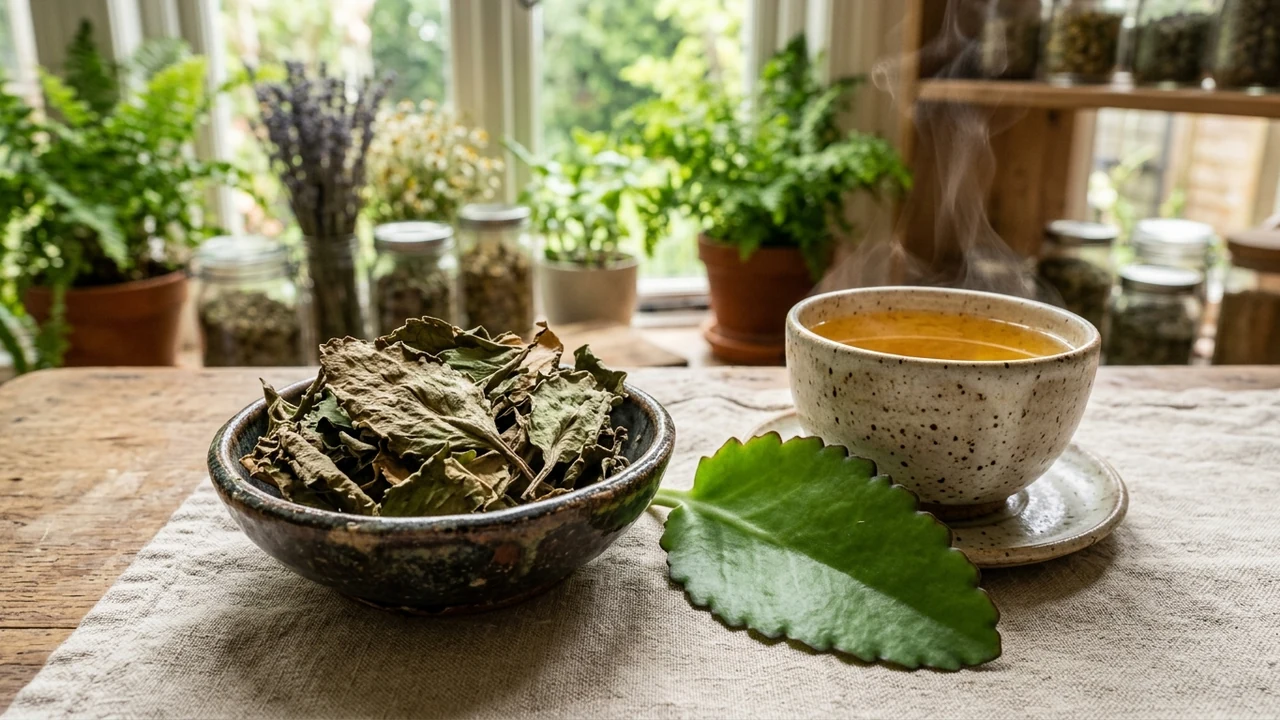
Steaming ceramic cup of restorative Kalanchoe miracle leaf tea with whole cut green leaves on linen
Miracle Leaf
Taxonomy: Bryophyllum pinnatum Life Leaf Monograph

Bryophyllum pinnatum Botanical Monograph: The Miracle Leaf / Life Plant

Kalanchoe tea, prepared from dried leaves of Bryophyllum pinnatum (known as the Miracle Leaf or Life Leaf), is a revered Caribbean and South American folk remedy for rebalancing bodily vitality and supporting cellular resilience through active flavonoid glycosides and bufadienolide compounds.

Brewing traditional Kalanchoe Tea from dried Bryophyllum pinnatum honors centuries of herbal wisdom. Commonly celebrated as the Miracle Leaf / Life Plant, this resilient succulent develops bulbils along its leaf edges, symbolising extraordinary biological renewal.

For gentle daily digestive balance, practitioners often complement this leaf with sweet organic bael fruit and flower tea or single-origin organic Ceylon green tea leaves.

Restoring Bodily Equilibrium: Flavonoid Glycosides & Cellular Resilience

The pharmacodynamics of the plant center on Flavonoid Glycosides (Quercitrin) and trace Bufadienolides. These unique secondary metabolites work synergistically to support deep Cellular Resilience, assisting the human physiology in Restoring Equilibrium after periods of immune or seasonal exhaustion.

Chromatographic assays confirm that cold and hot water leaf infusions extract notable quantities of luteolin and kaempferol derivatives. These polyphenolic antioxidants neutralize reactive hydroxyl species, protecting delicate mitochondrial membranes from oxidative fatigue and supporting normal immune recovery cascades.

Step-by-Step Kalanchoe Leaf Infusion Protocol & Dosage Guidelines

To prepare this restorative cup, execute a Covered Infusion (195°F / 8 Min). Using water just below the boiling point protects heat-sensitive glycosides while allowing the thick cut leaves to soften and release their soothing golden nectar.

Measure 2.0 to 3.0 grams of coarse cut dried leaf per 8 fluid ounces of filtered water. Maintain a tight lid over the brewing vessel to trap light aromatic vapors, and strain thoroughly before drinking.

Ethnobotanical Traditions in the Caribbean, Africa, and South America

Across diverse Ethnobotanical Traditions in Trinidad, Jamaica, Nigeria, and the Brazilian Amazon, healers have long administered Kalanchoe as one of their most trusted Adaptogenic Tonics. It is traditionally sipped warm in the early morning to clear stagnation and center mental clarity.

When recovering from seasonal lung heaviness or deep bronchial congestion, Amazonian practitioners frequently pair Kalanchoe with organic guaco tea for respiratory ease, combining coumarin bronchodilators with cellular protective flavonoids.

Frequently Asked Questions About Kalanchoe Tea

01 What is Kalanchoe tea and why is it called the 'Miracle Leaf'?

Kalanchoe tea is brewed from the leaves of Bryophyllum pinnatum (syn. Kalanchoe pinnata), a succulent native to Madagascar that naturalized throughout the Caribbean, South America, and West Africa. It earned the name 'Miracle Leaf' or 'Life Plant' because detached leaves can produce plantlets along their scalloped margins, mirroring its traditional folklore reputation for reviving exhausted bodily vitality.

02 What is the optimal water temperature for steeping dried Kalanchoe leaves?

Dried Kalanchoe leaves contain active flavonoid glycosides and phenolic acids that are best extracted at 195°F (90°C). Steeping covered for 7 minutes allows thorough extraction without subjecting delicate phytochemicals to active boiling temperatures.

03 Are there any safety precautions when drinking Kalanchoe tea?

Yes. Kalanchoe contains low concentrations of bufadienolide compounds, which share structural similarities with cardiac glycosides. Individuals with preexisting cardiac conditions, those taking digoxin or heart medications, and pregnant or nursing women should avoid Kalanchoe tea.